1800 696 784
1800 696 784

National Relay Service
Interpreter: 13 14 50
Open 9am-5pm Mon to Fri (closed public holidays)

[email protected]
For emergencies, please call 000

Where can I buy contraception?

In previous blog posts, we’ve discussed reasons why people use contraceptionhow contraception affects your period, their effectiveness and ways to prevent their failure as well as side effects some people may experience.

In this blog we will be discussing WHERE you can buy contraception in Victoria. Broadly speaking, we can divide contraception methods into those that require a prescription, and those that don’t.

Contraception methods that REQUIRE a doctor’s prescription

Some contraception options require both a doctor’s prescription, as well as needing to be administered by a trained professional.  

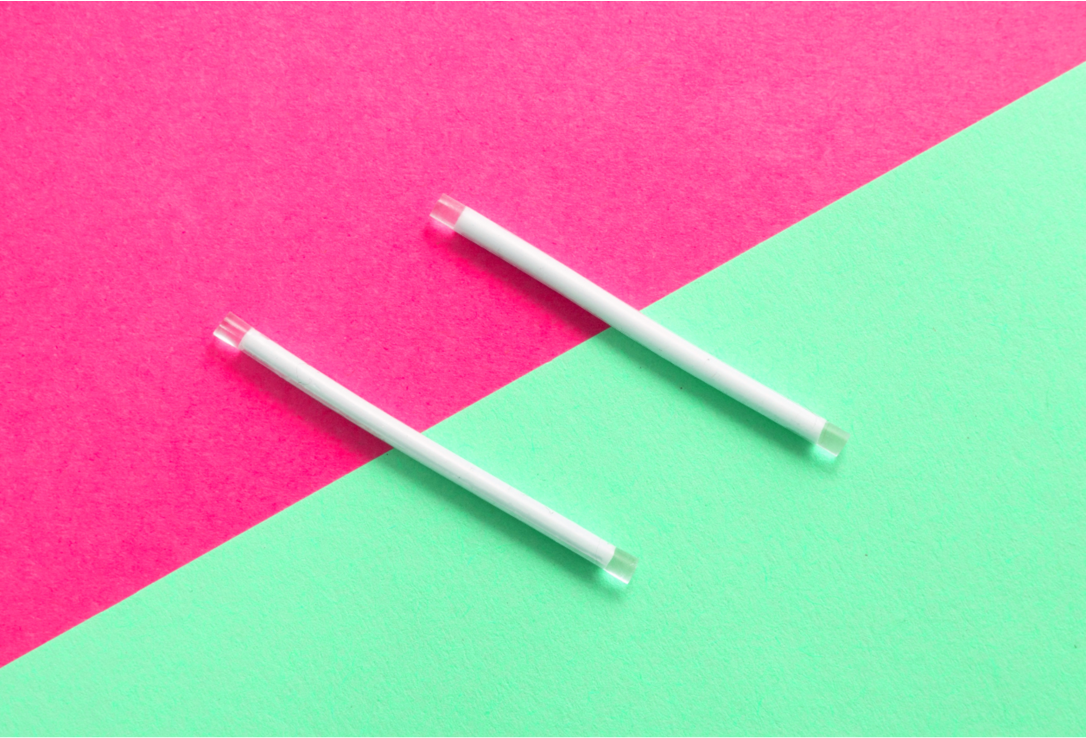
  • Contraceptive Implants: often known as the Implanon®, Nexplanon® and ‘the rod.’ They’re a small plastic rod placed under the skin of your upper arm, releasing a low dose of the hormone progesterone, to stop your ovaries from releasing an egg each month.
    Available at most pharmacies with a script, and inserted by a trained doctor or nurse. 

  • Hormonal IUDs: available in Victoria as the Mirena™ or Kyleena™. They’re a small, T-shaped, plastic device inserted into your uterus, releasing a low, steady amount of progestogen.
    Available at most pharmacies with a script, and inserted by a trained doctor or nurse. 

  • Copper IUDs: small, T-shaped contraceptive devices inserted into the uterus. They do not contain hormones, and constantly release a small amount of copper into the uterus.
    Available at most pharmacies with a script, and inserted by a trained doctor or nurse. 

  • Contraceptive injections: commonly known as the ‘Depo shot,’ these are given in your arm or bottom every 12 to 14 weeks.
    Available at most pharmacies with a script, and administered by a trained doctor or nurse. 

Other contraception methods require a doctor’s prescription, but you can use them without a doctor or nurse inserting them for you. These options include: 

  • Vaginal rings: Sold as the NuvaRing® in Australia, these are soft silicone rings that you self-insert into your vagina (as easy to put in as a tampon). They sit in your vagina for 3 weeks, and can be removed for 7 days or can be used back-to-back. They come in a pack of 3 and must be refrigerated.
    Available at most pharmacies with a script. 
  • Oral Contraceptive Pills: There are two types of oral contraceptives – the Combined Pill (contains both estrogen and progestogen) and the Mini Pill (contains progestogen only). There are many different types and brands available. The Pill can affect other medications, so let your doctor know if you are taking any other medications.
    Available at most pharmacies with a script. Some oral contraceptive pills are now available through online delivery and subscription services.

Contraception methods that DON’T require a doctor’s prescription

  • Emergency Contraceptive Pills: (commonly known as the “morning after” pill) are best taken as soon as possible after unprotected sex, ideally within 24 hours. They work by delaying when your ovaries release an egg (ovulation), and are around 85% effective in preventing an unintended pregnancy.
    There are two options available:

Emergency contraceptive pills can bought directly from most pharmacies without prescription from your doctor – they are available “over the counter”. Your pharmacist will go through some questions with you before dispensing the medication. 

  • External condoms are sheaths made of latex or polyurethane, rolled onto an erect penis before sex. These come in different sizes, materials and flavours.
    These are widely available from supermarkets, convenience stores, petrol stations and pharmacies. Some health clinics, youth services and community health services provide them for free.  

  • Internal condoms are a soft pouch made of latex or polyurethane, with two flexible rings at each end. The internal condom is inserted into the vagina before sex.
    These are available online, and at some pharmacies and family planning clinics. Unfortunately, they can be a bit harder to find and are more costly than external condoms.  

  • Diaphragms are a shallow, cup-shape device made of silicone. You self-insert the diaphragm into your vagina to cover your cervix.
    These are available online, and at some pharmacies and family planning clinics.
    Some people prefer to meet with a nurse or doctor before using a diaphragm for the first time, so they can show you how to insert and remove it. 

When purchasing contraception from pharmacies, it is useful to call the pharmacy in advance to check for stock.  Prices can also vary depending on where you go, so if cost is an issue, it might help to look at different pharmacies to compare prices.

When travelling interstate or overseas, make sure you plan ahead for your contraception needs as different rules will apply in different places. If you can, organise your contraception supply before a trip!

It’s always a good idea to discuss your contraception options with your GP or sexual health nurse. You can contact us at 1800 My Options to find a service near you – call 1800 696 784 (weekdays, 9am – 5pm).
References:

Benefits of Contraception Use, New Zealand Family Planning 2013.
Contraception Choices, Better Health Channel 2022.

Why do people use contraception?

Contraception is used for many reasons, from preventing unwanted pregnancy, to managing menstrual cycles and various health conditions.

Different people may choose to use different methods depending on their circumstances, so it is important not to make assumptions on why someone might choose to use contraception, or to judge them for the type of contraception method they choose to use.

First of all, what is contraception?

Contraception refers to the intentional use of artificial methods, various devices, medication, or surgeries to prevent unwanted pregnancy.  Some contraceptive barrier methods, such as condoms, are used to prevent sexually transmitted infections (STIs).

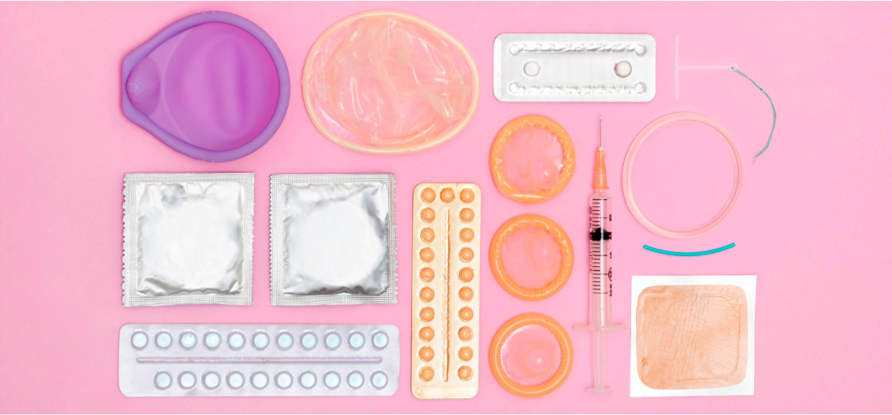
In Australia, there are many contraception methods available:

You can have a read of their correct use and effectiveness in a previous blog post we wrote, at this link.

So, what are the main reasons people use contraception?

It is important to note, that most contraception methods do NOT provide protection against STIs, so the use of barrier methods as well as getting regular STI tests are key in ensuring STI prevention. Barrier methods like condoms can be useful in promoting safer sex and preventing STIs. These can be used for oral, vaginal, and anal sex.

It’s always a good idea to discuss your contraception options with your GP or sexual health nurse. You can also contact us at 1800 My Options to find a service near you – call 1800 696 784 (weekdays, 9am – 5pm).
The Better Health Channel has a very useful factsheet on various Contraception Choices.

You can also view our video explaining the various contraception options available in Victoria.

References:

Benefits of Contraception Use, New Zealand Family Planning 2013.
Contraception Choices, Better Health Channel 2022.
Contraception, 1800 My Options 2022

What’s it like to get an IUD?

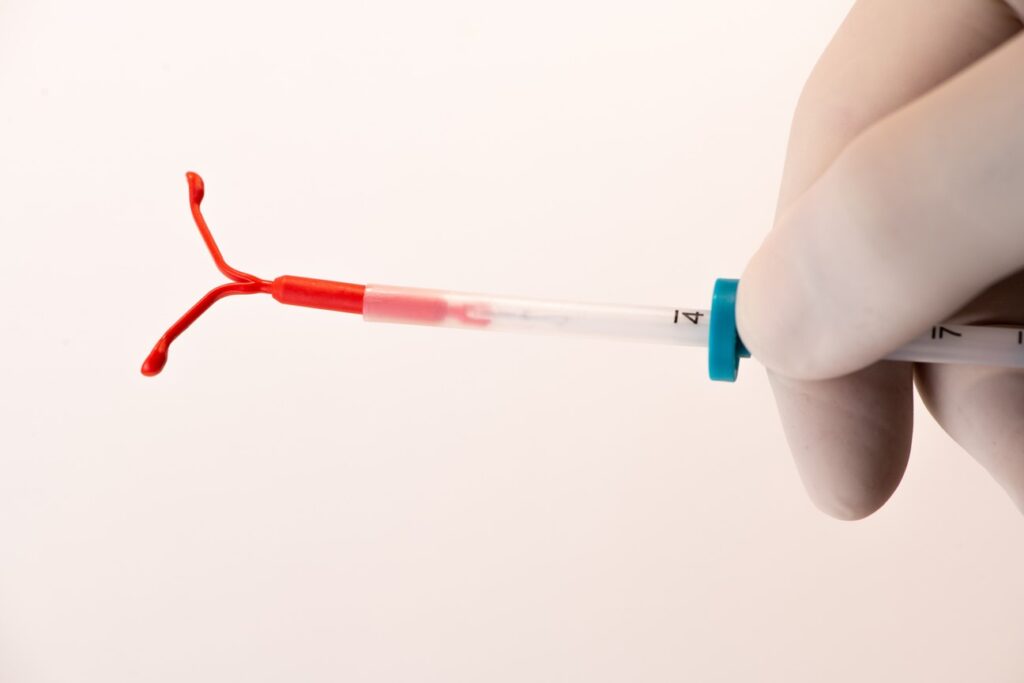
IUDs, or intrauterine devices, are small, T-shaped contraceptive devices inserted in the uterus.

They’re over 99% effective at preventing pregnancy, and last up to 10 years! However, less than 2% of Australian women use them. Part of the reason is that we simply haven’t heard much about them, and don’t know what it’s like to get one. 4 women share their stories here – and remember, everybody reacts to different contraception differently!

​If you want to discuss your contraception options, or find a health service that can insert IUDs, please contact us on 1800 696 784 (weekdays, Mondays – Fridays).

How contraception affects your period

There are two main hormones which regulate the female menstrual cycle: oestrogen and progesterone.

These hormones ebb and flow in varying amounts which feeds back to the brain, and forward to the ovaries and uterus, to dictate what stage of the cycle your body is at (such as growing the uterine lining to prepare for fertilisation, triggering egg release at ovulation, or shedding the lining if fertilisation doesn’t occur).

Any hormonal contraceptive available works on one or both of these hormones in some way to disrupt this complex signalling. The oral contraceptive pill (referred to as the OCP, or sometimes as ‘the pill’) uses both oestrogen and progesterone to keep hormone levels higher in your body. This will prevent ovulation, as there are no fluctuating hormonal signals to trigger it. The uterine lining stays stable as a result, and no period occurs. However, if you decide to take the sugar pills (which have no active hormones), you will bleed – but this is due to the withdrawal of the hormones which are keeping the uterine lining alive, and so is more of a manufactured period than a natural one.

Alternatively, some contraceptives that use progesterone only (such as Mirena, Implanon, depot injections, or the progesterone-only pill (or ‘mini-pill’)) work by preventing the uterine lining from building up in the first place. This is why, after several months of using one of these contraceptive types, some people notice their periods tend to lighten, and they may go away altogether.

However, not every person is the same, and some may find that their bleeding becomes heavier or more irregular on some types of contraceptives. If this is annoying or worrying to you, see your doctor to discuss other options available to you.

Thank you to our guest contributor, Dr Madeleine for clearing this up for us!
If you want more information about your contraception options or help finding a contraception service, contact 1800 My Options on 1800 696 784, weekdays 9am – 5pm.

Contraception – What If I Have Side Effects?

Contraception can be a wonderful tool, in preventing unplanned pregnancy or managing many medical conditions. However, many people are worried about using contraception, due to a fear of potential side-effects.

Contraception can cause side-effects in one person and no side-effects in another. Unfortunately, it is highly variable. What you experience may be completely different from what your friend or sister experiences, on the exact same contraception! Generally, if you are experiencing side-effects, they usually settle within 3-6 months of using the contraception. However, if the side-effects become too much to tolerate, it is your right to ask for another contraception option.

Weight gain

As it relates to contraception, some people may fear weight gain, some may desire it, and others may not consider it important at all. Sometimes, it’s not so much that a person is gaining weight – it’s that the contraception may cause minor bloating and/or changes to the amount and distribution of body fat to areas where previously it wasn’t. It’s hard to know if you will be affected by this or not. 

Bleeding

There are some contraception options that are known to cause irregular bleeding, make your bleeding a bit lighter or heavier, or stop your bleeding altogether. It’s about what you prefer, or can manage. Often times, bleeding will settle down within 6 months of a new contraception – especially for most long acting hormonal contraception options, which many people use to regulate bleeding. But if your bleeds are worsening or not changing, or if they’re causing low iron and/or low energy it’s worth getting checked by your doctor.

Mood changes

When a person uses hormonal birth control, it can alter the level of hormones in their body, which could possibly cause changes to their mood. However, it’s important to recognise that other social and environmental factors can be at play. To reassure those who have mental health conditions such as depression, hormonal contraception has not been associated with worsening of symptoms. Some forms of contraception may increase the risk for being diagnosed with depression, but effects on mood are mixed, can vary by type and whether the hormone goes throughout the whole body or acts locally on the uterus/ovaries.


No matter what, it’s your body and your choice. Finding the right type of contraception for you can take time, patience and trial and error. But you know what’s best for you – so don’t be afraid to voice any of your concerns to your health professional.

Breastfeeding + contraception: the 5 things you need to know

Many people have questions about breastfeeding and contraception. For most people who’ve just had a baby, getting pregnant again is definitely not a priority! So what do you need to know about contraception and breastfeeding?

If you want to have a chat about the different types of contraception options available, and where in Victoria you can go to get them, 1800 My Options can help! Call us on 1800 696 784, or email [email protected]

Implant Insertion: What’s It Really Like?

One of our workers gets an implant inserted – and shares all!

Like lots of people, the first hormonal contraception option I was on was the oral contraceptive pill. However, with an unreliable digestive system, terrible memory and a very erratic sleep schedule, I soon realised that the Pill was not for me. I needed something that wouldn’t leave me vaguely anxious every time I had sex!

When I mentioned all this to my GP, she asked if I’d heard of the contraceptive implant. I hadn’t, but as she explained what it was, I felt confident it’d work for me – it was 99.9% effective at preventing pregnancy, and lasted up to 3 years at a time. It was just a small rod inserted into the arm, and I could just forget about it after the insertion.

It also released a lower dosage of hormone than the Pill I was on, which meant that any side effects I was experiencing might decrease or disappear. There was a chance that my period might be affected – the GP said that for some patients, their periods stopped altogether, and for some patients, their bleeding might increase. However, for most patients, their bleeding stayed around the same and became lighter over time. I’d never really had issues with my periods before, so I was happy to try it out.

After explaining how it all worked, the doctor wrote me a script for the implant. She then booked me in for an extended consultation with another doctor at the clinic, who had done the implant insertion training. From there, it was pretty straightforward:

Over the next few days, I had a bit of bruising around the implant area. This all completely faded after a week. There is a tiny scar (about the size of texta tip) where the implant was inserted. My periods became extremely light, and stopped altogether (which I’m aware makes me quite lucky – I was warned that this definitely wasn’t everyone’s experience!).

Overall, getting the implant was pretty straightforward. Knowing that I am very protected from unplanned pregnancy, and don’t have to remember to take something everyday or get a script every few months has been really great. I would highly recommend talking to your doctor about your contraception options, and seeing if the implant could work for you!

To find a doctor near you who can help with implant insertion or other contraception options, please contact 1800 My Options on 1800 696 784 (weekdays 9am-5pm), or head online to search.

* indicates required